

Race Recovery Part 1
The first hours and days after your race are the most important for a quick and successful recovery.
Recovering after a race sounds like the easiest part of the racing and running cycle. However, most of us don't do it correctly. Myself included. Here I am, less than 24 hours after finishing the first leg of the Buckin' Hell 50 km relay, having done very little recovery, and I can feel my body getting more and more sore. Maybe I'm looking for inspiration to get myself out of this chair!
For reference, the first 25 km of the Buckin' Hell course is primarily downhill, making it the perfect candidate for a strong recovery routine because lots of downhill running will wreck your quads in a very special way.
Before we dive into the specifics of recovery, I'd like to point out that this information is designed for all the people who sign up for a race and put one foot in front of the other until they either cross the finish line or can no longer continue. The vast majority of us are not truly racing for a podium finish. We're racing to prove that we can, to beat our own times, or simply for the fun of hearing the collective pitter-patter of feet joining together for one common goal: getting to the finish.
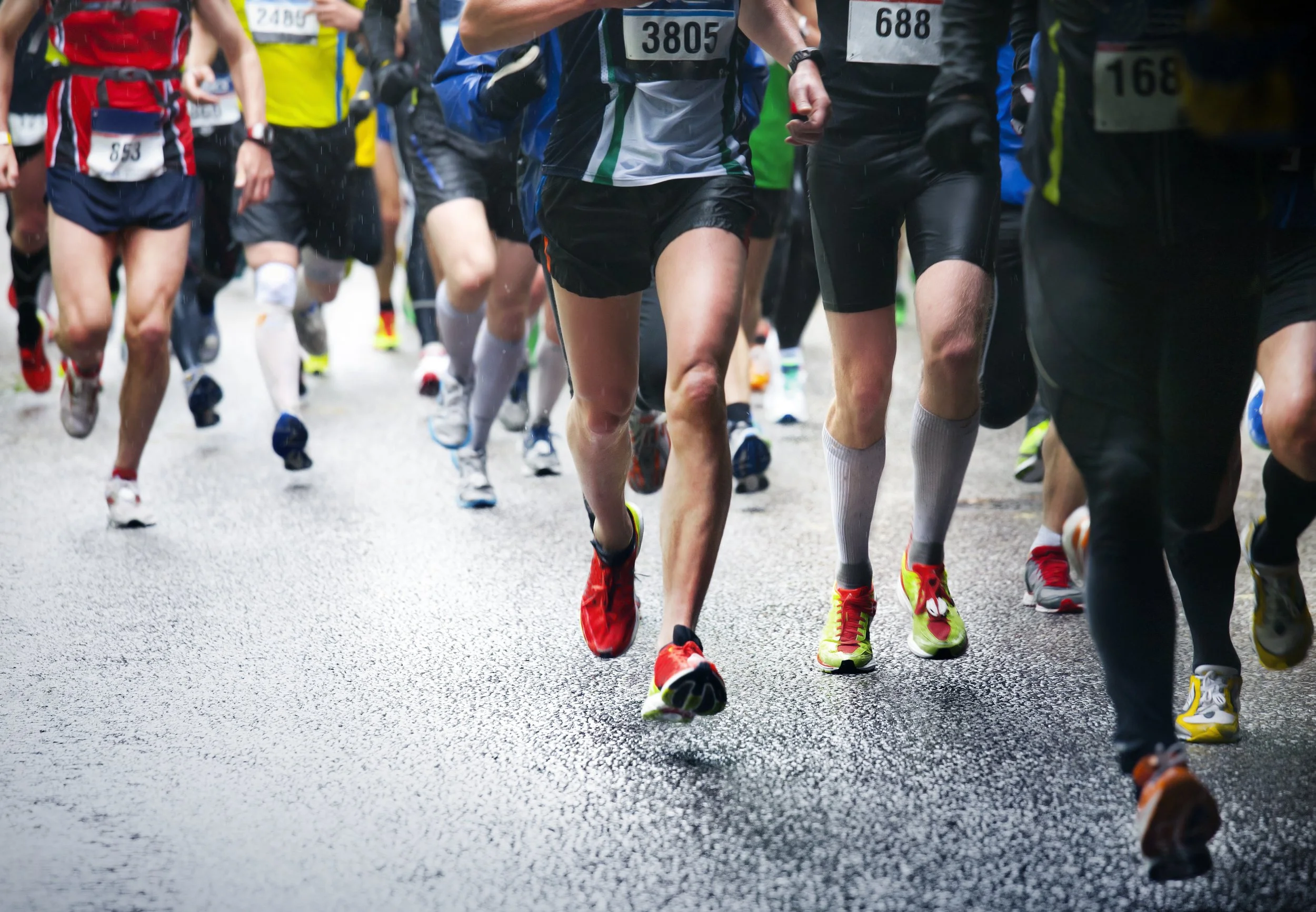
What happens to our bodies when we run a race? What do we need to recover from?
Micro "tears" in our muscles leading to DOMS (Delayed Onset Muscle Soreness)
Glycogen depletion
Dehydration
GI distress
Immune system suppression
The extras: blisters, chafing, lost toenails, and more!
Makes you wonder why we do this crazy thing in the first place.

Micro "Tears" and DOMS
What it is
DOMS feels like a deep, generalized tightness or stiffness that encompasses an entire muscle group and typically eases with gentle movement. It occurs after exercise and usually lasts a couple of days at most. It's especially common after prolonged or unfamiliar exercise, particularly movements with a lot of eccentric loading, like running downhill.
"Micro tears," or cellular damage, are the terms commonly used when referring to the damage portion of this natural process, while DOMS is the sensation we perceive. When cellular damage occurs, a natural and necessary process begins so our muscles can repair and rebuild. This process brings inflammation to the muscle, which is why pain and sensitivity are felt. This is what we know as Delayed Onset Muscle Soreness (DOMS).
DOMS usually begins 12–48 hours after exercise and resolves on its own without intervention. That said, giving your body a helping hand can hopefully speed up recovery—or at least make the symptoms a little more manageable.

What it is not
Lactic acid.
It was long believed that lactic acid buildup in our muscles was the reason we felt sore after a workout. A lot of research has shown that this simply isn't the case. Lactate (what we commonly call lactic acid) is a byproduct created when our muscles burn glucose for energy. It doesn't stay in your muscles for days—it's typically cleared within about 60 minutes after you're done exercising.
Let's say it together now… lactic acid is not the reason our muscles are sore!
DOMS is also not sharp, shooting, or sudden pain. If you're experiencing sudden sharp pain, swelling, bruising, or a restricted range of motion, please seek medical advice.
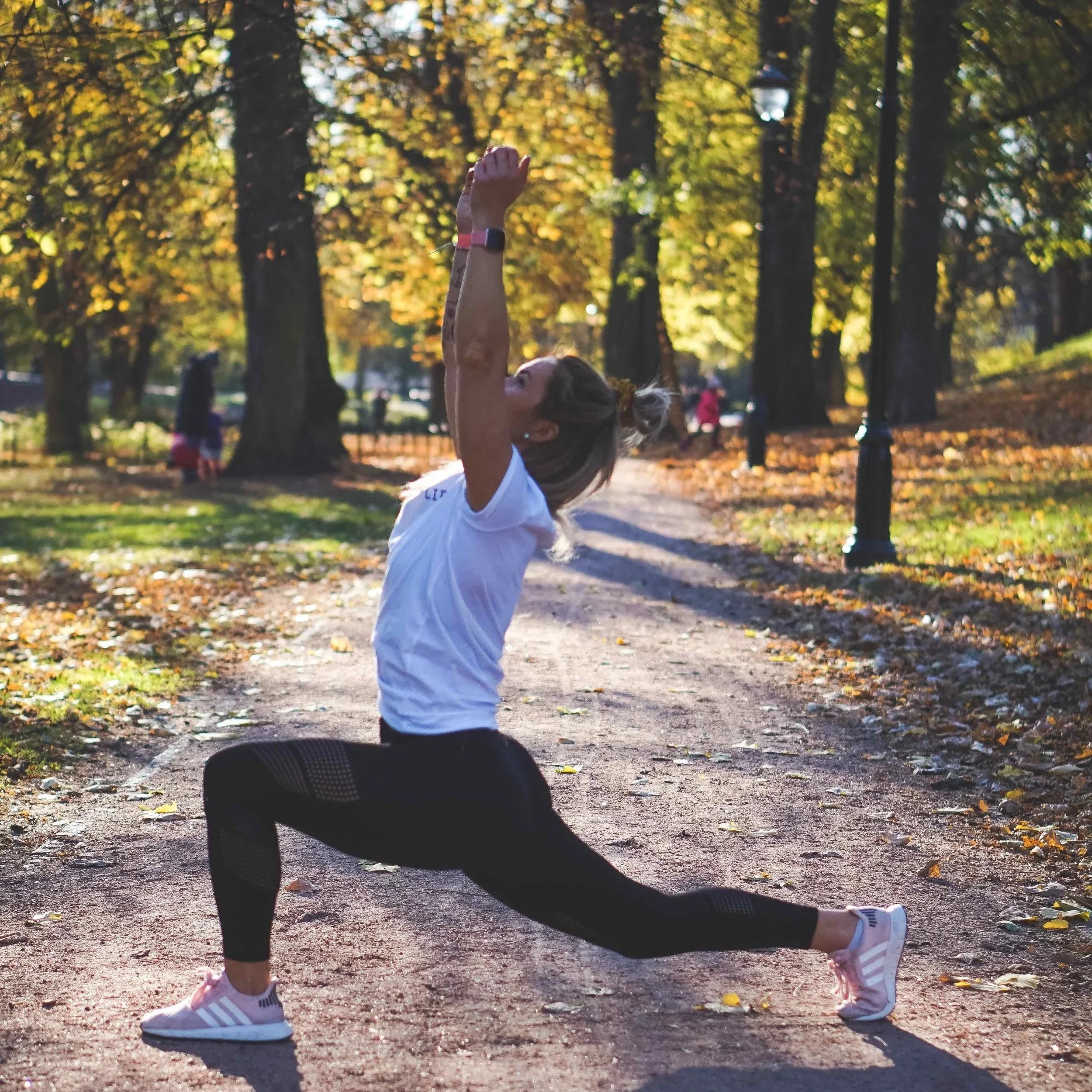
What to do about it
Active recovery
Do you want to know what I did yesterday after my run? I sat in a car for four hours trying to catch my relay partner at a few cheer spots while attempting to stay warm and dry.
Is that active recovery? No.
So, what is active recovery? It's any form of gentle movement that works for you. My advice is to try and make it peaceful. Our nervous systems are jacked up after all the excitement of race day, so try to bring things back down by taking a walk in nature, going for an easy swim, or doing whatever helps you feel calm. Being active increases circulation, which supports healing. Simple as that.
Massage or foam rolling
Research is still working this one out. Some studies suggest it's helpful, while others say it isn't. Anecdotally, it works for me, and it works for many of my clients. If it's something that helps you, do it. If not, skip it!
Diet and hydration
This isn't my field of expertise, but here's an article to help you make good nutrition choices to support your recovery:
Warm up
A solid warm-up with dynamic stretches can help wake up your muscles and prepare them for activity. Just like you wouldn't jump out of bed and straight into a meeting, your muscles don't enjoy going from no activity to excessive activity either.
Here is a link to my blog outlining some great warm-up activities.
https://www.cadencehealth.ca/blog/feel-better-and-move-faster-with-a-dynamic-warmup-before-you-run
Stay tuned for more tips on recovering from your race!
I am a massage therapist working in Kitsilano near Broadway and Bayswater.
I would like to acknowledge that I live and work in Vancouver and Kitsilano which is located on traditional Coast Salish territory. The land that is currently known as Kitsilano has been shared by the xʷməθkʷəy̓əm (Musqueam), Sḵwx̱wú7mesh (Squamish), and səlilwətaɬ (Tsleil-Watuth) peoples since time immemorial.